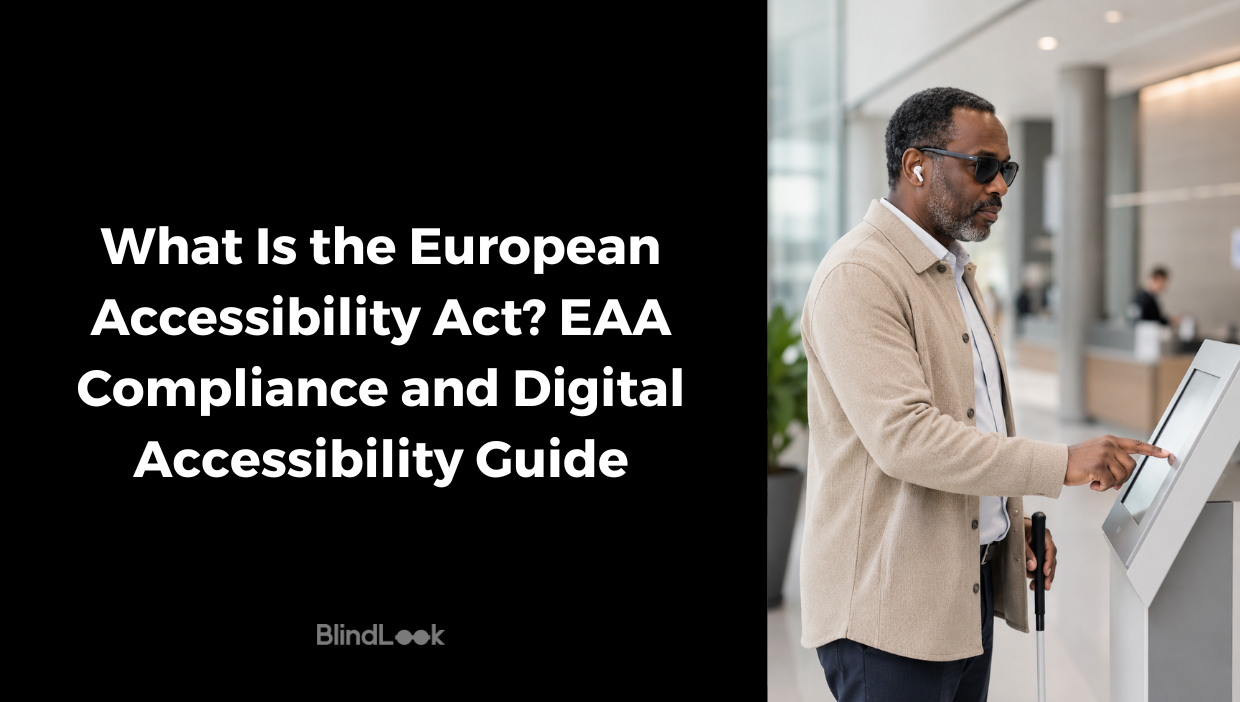
What Is the European Accessibility Act?
The European Accessibility Act, or EAA, is a major accessibility regulation across the European Union aimed at making digital products and services more accessible to users with disabilities. EAA compliance covers a wide range of digital experiences, including websites, mobile applications, e-commerce platforms, banking services, digital documents, and self-service technologies.
Digital accessibility is not merely a technical standard; it is a strategic transformation area for brands in terms of user experience, inclusivity, and independent usability. When a website or mobile application is not accessible, many individuals—especially visually impaired users—cannot access digital services equitably and independently.
As the pioneering accessibility startup with the highest number of global awards in its field, BlindLook works to make brands' digital assets more accessible, inclusive, and independently usable.
Why Is EAA Compliance Important?
EAA compliance prepares brands for the stringent accessibility mandates defined under the European Accessibility Act. Website accessibility, mobile app accessibility, WCAG compliance, user testing, and technical accessibility analysis form the foundational pillars of this preparation process.
Accessible digital experiences do not just benefit users with disabilities; they offer a more logical and seamlessly navigable framework for all visitors. Correct heading hierarchies, screen reader compatibility, keyboard navigation, proper color contrast, accessible forms, and descriptive alternative text directly elevate the overall user experience.
Consequently, aligning with the European Accessibility Act is far more than just a regulatory hurdle for brands; it is an excellent opportunity to establish a more inclusive, credible, and user-centric digital footprint.
Which Areas Does the European Accessibility Act Cover?
The European Accessibility Act spans across a broad spectrum of everyday products and services, including e-commerce sites, banking services, corporate websites, mobile apps, e-books, payment terminals, ticketing systems, and self-service devices.
This extensive scope indicates that brands should never view the digital accessibility compliance process as an effort restricted solely to their website. Every single digital touchpoint where a user interacts with the brand must be systematically evaluated for accessibility.
BlindLook shapes brands' accessibility roadmaps through exhaustive website accessibility analysis, mobile application accessibility testing, WCAG 2.2-based technical evaluations, and real-world testing with visually impaired users.
The Relationship Between WCAG Compliance and the EAA
The WCAG (Web Content Accessibility Guidelines) represents the premier international technical criteria used to render digital content accessible. While the European Accessibility Act mandates that digital services become accessible, WCAG compliance serves as the definitive technical reference point for brands to achieve that goal.
WCAG compliance ensures that digital content remains perceivable, operable, understandable, and robust. Within this scope, elements such as screen reader compatibility, keyboard accessibility, form labels, alternative text, color contrast ratios, error message clarity, and user task flows are rigorously assessed.
BlindLook addresses brands' digital accessibility compliance journeys not merely through automated tools, but by merging expert technical analysis with genuine user experiences.
Why Is Accessibility Testing Necessary?
Accessibility testing is one of the most effective methods to determine how usable a website or mobile application truly is for individuals with disabilities. Automated accessibility tools are valuable for identifying technical errors, yet they fail to capture the nuances of human interaction on their own.
Therefore, testing with visually impaired users remains a critical component of the digital accessibility process. Observing how a user utilizing a screen reader navigates a page, whether they can successfully complete a form, how they interpret buttons, and exactly where they encounter friction in the transaction flow reveals the true level of accessibility.
BlindLook reviews your digital products using real-world visually impaired user testing, providing your brand with a highly actionable, prioritized accessibility improvement roadmap.
Start Your EAA Compliance Process with BlindLook
As the pioneering accessibility startup with the most global awards in its field, BlindLook supports brands through their end-to-end digital accessibility transformation.
Under our Digital Accessibility Compliance Package, website accessibility analysis, mobile app accessibility testing, WCAG 2.2 checklist verification, technical evaluation, expert audit, and real visually impaired user testing are delivered within a single, cohesive workflow.
By partnering with BlindLook, you can bring your brand's digital presence into full compliance with the European Accessibility Act and WCAG standards, crafting an independently usable and inclusive user experience that leads the accessibility movement in your sector.
Frequently Asked Questions
What is the European Accessibility Act?
The European Accessibility Act is an EU-wide directive aimed at making specific products and services fully accessible to individuals with disabilities.
What is EAA compliance?
EAA compliance is the process of updating and optimizing websites, mobile applications, e-commerce platforms, and digital services to meet the strict legal accessibility standards outlined by the act.
Why is WCAG compliance important for the EAA?
WCAG compliance provides the technical framework necessary to make web content accessible. It stands as the primary standard referenced during EAA compliance processes for website and mobile app accessibility.
Why should accessibility testing be conducted?
Accessibility testing is performed to uncover and eliminate any digital barriers that users with disabilities might face. Real-user testing brings these accessibility hurdles to light directly through the lens of user experience.
How does BlindLook support EAA compliance?
BlindLook empowers brands throughout their EAA compliance journey by providing website accessibility analysis, mobile app accessibility testing, WCAG 2.2-focused technical reviews, and testing with real visually impaired users.